
by Eléonore Dalzon //
De l’exploration de la nature et du corps, à celle des mémoires diasporiques et des images de propagande, découvrez notre sélection de quatre expositions d’artistes originaires d’Asie et de sa diaspora qui se déroulent en France ce mois-ci.
Whether exploring nature and the body, diasporic memories, or propaganda imagery, our selection of four exhibitions by artists from Asia and its diaspora, taking place in France this month, is well worth discovering.
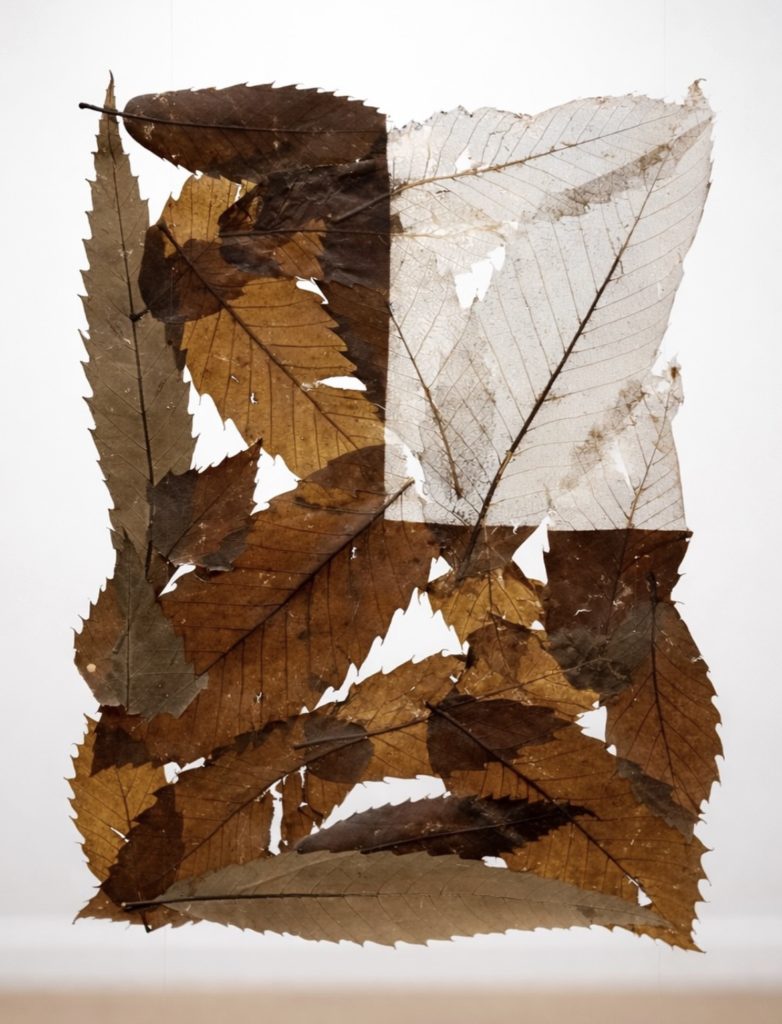
Duy Anh Nhan Duc, « Dentelle de feuille de châtaigniers », Photo Clémence Danon Boileau, Exposition Hissons les Frondaisons, Saint-Maur-des-Fossés 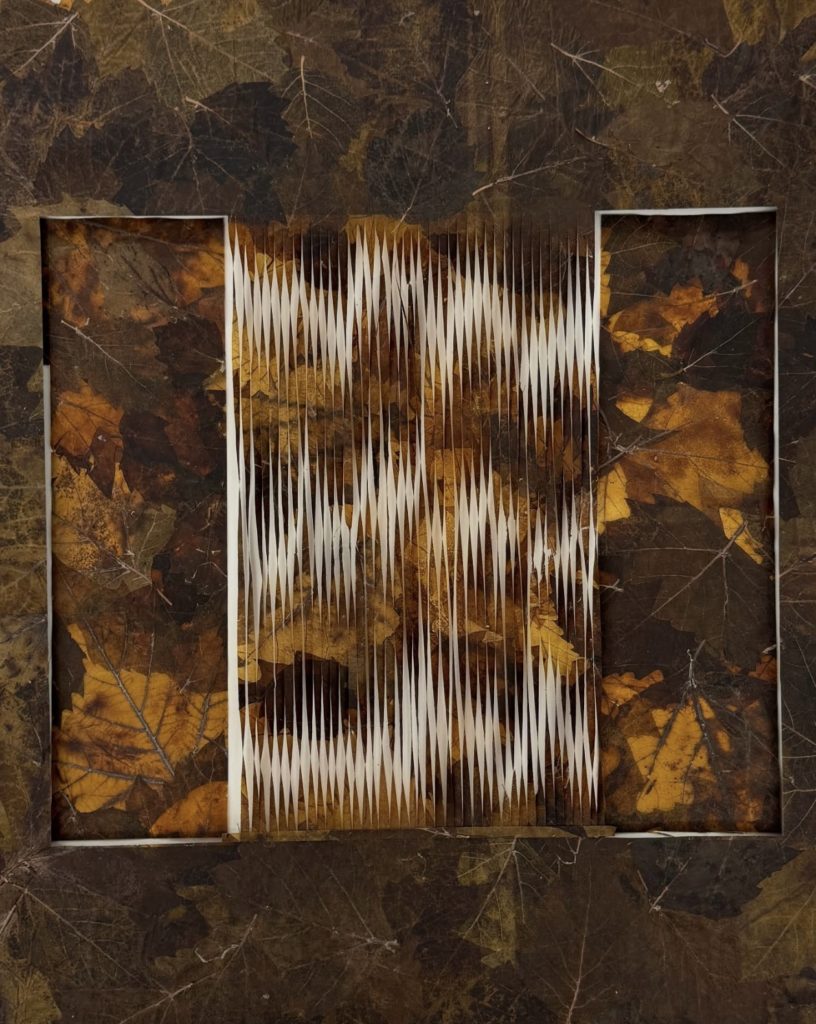
Duy Anh Nhan Duc, « Feuilles de platane », 90 x 90 x 8 cm, Photo Clémence Danon Boileau, Exposition Hissons les Frondaisons, Saint-Maur-des-Fossés
Duy Anh Nhan Duc “Hissons les frondaisons” @ Maison des arts et de la culture Villa Médicis, 5 Rue Saint-Hilaire, Saint-Maur-des-Fossés — 17.01-15.03.2026
Né en 1983 à Hô Chi Minh-Ville, Duy Anh Nhan Duc place la nature au cœur de son œuvre. Avec poésie et délicatesse, il invite le visiteur à entrer en dialogue avec elle à travers les feuilles, les fruits et les écorces qu’il collecte. Son travail explore un équilibre subtil entre la fragilité, le rêve et la liberté.
L’exposition Hissons les frondaisons dévoile sa recherche portant sur l’arbre, qu’il considère comme un être vivant pleinement intégré à l’espace urbain. De Paris à Saint-Maur, l’artiste révèle les secrets des aulnes et des saules, notamment à travers leurs feuilles, dont il dévoile la fine dentelle végétale au terme d’un long processus de transformation et de création. En extrayant les pigments de ces feuilles, il révèle la couleur propre à chaque arbre et obtient près de soixante nuances différentes, insoupçonnées. Loin d’être figées, ces teintes évoluent au fil du temps, rappelant le caractère vivant et mouvant de la matière organique. Traduire la nature sans la dénaturer constitue l’un des défis de l’artiste plasticien. Dans le cadre de cette exposition, il collabore avec Dior afin de reproduire le lichen et d’en restituer la vitalité, cherchant non pas à imiter la nature, mais à en transmettre l’essence.
Born in 1983 in Ho Chi Minh City, Duy Anh Nhan Duc places nature at the heart of his work. Through the leaves, fruits, and bark he gathers, he invites viewers to enter into dialogue with nature with poetry and delicacy. His practice explores a subtle balance between fragility, dreamlike imagination, and a sense of freedom.
The exhibition “Hissons les frondaisons” (“Hoisting the Canopies”) reveals the artist’s ongoing exploration of trees, which he regards as living beings fully integrated into the urban environment. From Paris to Saint-Maur, he uncovers the hidden qualities of alder and willow trees, particularly through their leaves, whose fine vegetal lacework he reveals after a long process of transformation and creation. By extracting pigments from these leaves, he reveals the unique color of each tree, producing nearly sixty distinct and unexpected shades. Far from being fixed, these tones continue to evolve over time, reflecting the living and ever-changing nature of organic matter. Translating nature without distorting it is one of the central challenges in the artist’s practice. For this exhibition, he collaborated with Dior to recreate lichen and convey its vitality, seeking not to imitate nature, but to capture and transmit its essence.
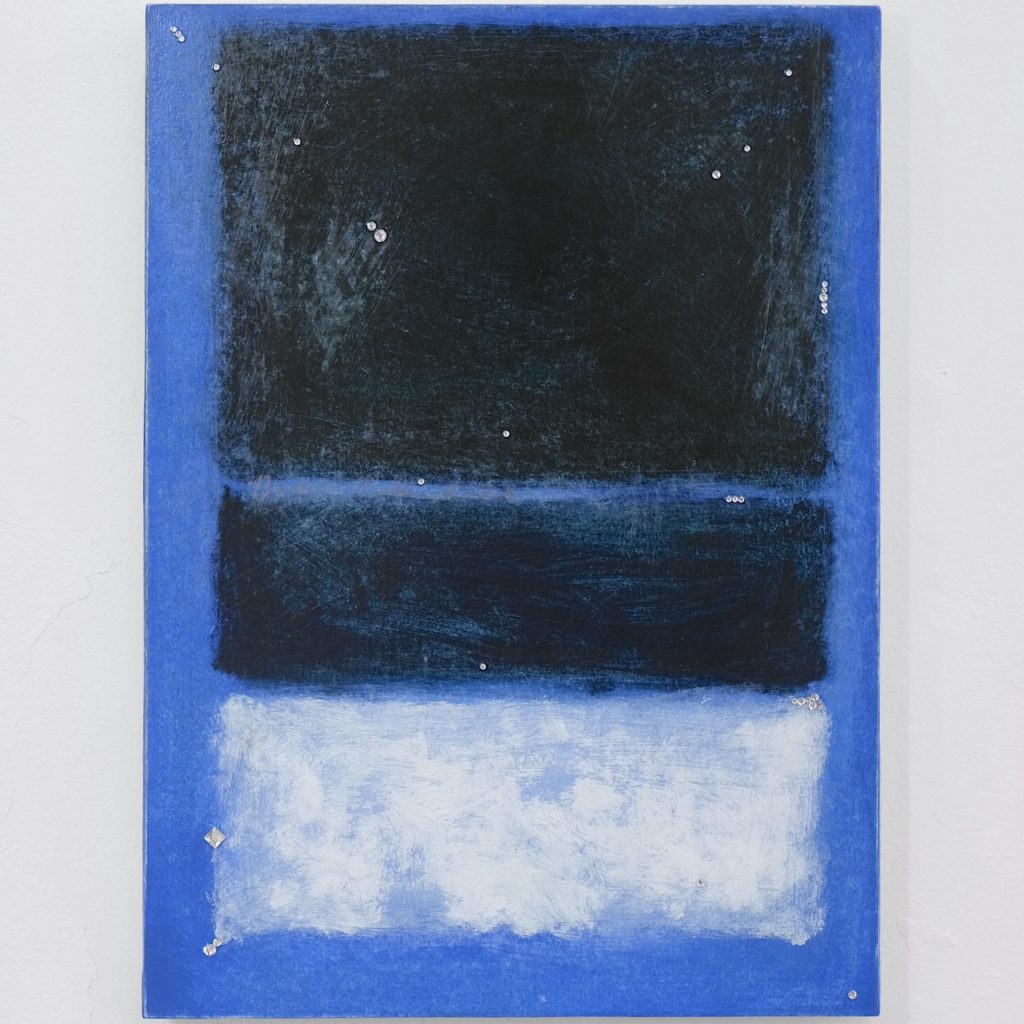
boma pak, « My tear drops when I see him…, by an unknown painter Boma Pak (b. 1922) », huile, crayon, strass sur papier, 2026 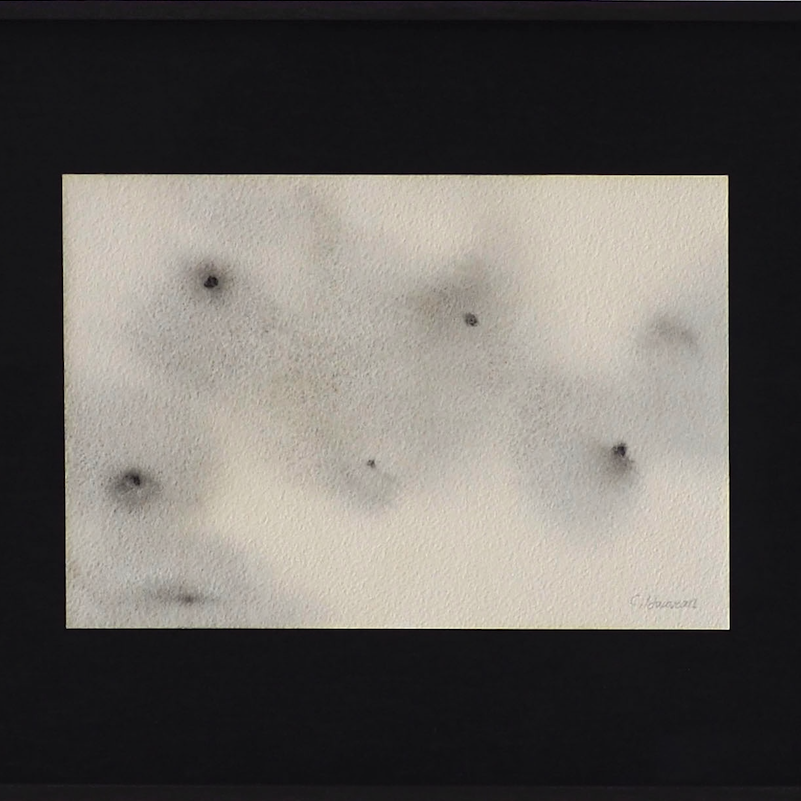
Hwaran Cho, « Alveolus 122 », 26 × 18 cm, aquarelle sur papier, 2025
Hwaran Cho & boma pak, “Des rideaux liquides” @ Galerie Vazieux, 16 rue de Provence, Paris 9 — 05.03-21.03.2026
Des rideaux liquides réunit deux artistes dont les pratiques, à première vue, diffèrent tant par la technique que par l’esthétique et la démarche. Pourtant, un dialogue subtil se noue entre les univers de Hwaran Cho et de boma pak, dans leurs similitudes comme dans leurs écarts. À l’image de rideaux entrouverts, leurs œuvres créent un espace mouvant, un va-et-vient où les frontières se troublent, dans une suspension où le possible n’est pas encore perceptible mais semble sur le point d’advenir.
Née en 1988 à Séoul, boma pak déploie dans son installation Material Suite un ensemble d’œuvres mêlant sculptures en argile à une constellation de matériaux hétérogènes : papiers adhésifs, parfums, rubans… Refusant toute assignation à un médium unique, elle explore la matérialité dans ce qu’elle a de plus composite. Sa série picturale My Tears Drop When I See Him R. introduit une dimension supplémentaire. Ce corpus est attribué au personnage fictif, Boma Pak (Rhodes), né en 1922 et formé aux États-Unis dans les années 1970. Au cœur de cette fiction : la reproduction d’œuvres de Mark Rothko. En brouillant les repères entre original et copie, elle interroge les notions d’auteur, d’authenticité et d’identité. La hiérarchie traditionnelle entre l’œuvre et la reproduction s’en trouve déstabilisée. La question de la marginalité devient ainsi un axe central de sa pratique.
Née en 1994 à Gyeonggi, Hwaran Cho développe quant à elle un travail à l’aquarelle et à la peinture à l’huile centré sur l’interaction chimique entre matière et pigment. Sa pratique épouse le rythme de la respiration : de l’inspiration à l’expiration. Par l’aquarelle, elle explore la relation entre le pinceau et l’eau, exigeant une grande précision, instaurant une harmonie fragile. Avec la série Pulmonary Alveolus, elle se concentre sur la dimension physique et scientifique de la respiration, de la réaction des cellules au contact de l’air inhalé. Son travail puise ainsi dans les techniques picturales d’Asie de l’Est, où le geste, l’absorption et la diffusion constituent un pilier essentiel de cette tradition. Le pigment, au contact de l’eau, se déploie, se concentre ou se dissipe, à l’image du souffle qui traverse le corps. L’art apparaît alors comme une conséquence directe de la vie, indissociable des processus organiques et des transformations continues qui la traversent. Sa démarche façonne une réflexion incarnée sur notre présence au monde.
“Des rideaux liquides” brings together two artists whose practices, at first glance, differ in technique, aesthetics, and approach. Yet a subtle dialogue emerges between the worlds of Hwaran Cho and boma pak, in both their similarities and their contrasts. Like partially drawn curtains, their works create a shifting space—a movement back and forth where boundaries blur, in a suspended moment where possibilities are not yet fully visible but seem on the verge of emerging.
Born in Seoul in 1988, Boma Pak presents “Material Suite”, an installation that combines clay sculptures with a variety of materials, including adhesive papers, perfumes, ribbons and more. Refusing to be confined to a single medium, she explores materiality in its most composite and layered forms. Her pictorial series “My Tears Drop When I See Him R.” introduces another dimension. This body of work is attributed to a fictional figure, Boma Pak (Rhodes), born in 1922 and supposedly trained in the United States during the 1970s. At the center of this narrative lies the reproduction of paintings by Mark Rothko. By blurring the boundaries between original and copy, the artist questions notions of authorship, authenticity, and identity.The traditional hierarchy between the artwork and its reproduction is thus destabilized, while the idea of marginality becomes a central axis of her practice.
Born in 1994 in Gyeonggi, Hwaran Cho develops a practice centered on watercolor and oil painting, focusing on the chemical interaction between matter and pigment. Her process follows the rhythm of breathing—from inhalation to exhalation. Through watercolor, she investigates the delicate relationship between brush and water, requiring great precision and producing a fragile harmony. In the series “Pulmonary Alveolus”, she focuses on the physical and scientific dimensions of breathing, particularly how cells react when they come into contact with inhaled air. Her work also draws from East Asian painting traditions, where gesture, absorption, and diffusion form essential pillars of the practice. When pigment meets water, it spreads, concentrates, or dissolves—mirroring the breath that moves through the body. Thus, art appears as a direct consequence of life itself, inseparable from organic processes and the continuous transformations that shape them. Ultimately, her practice forms an embodied reflection on our presence in the world.
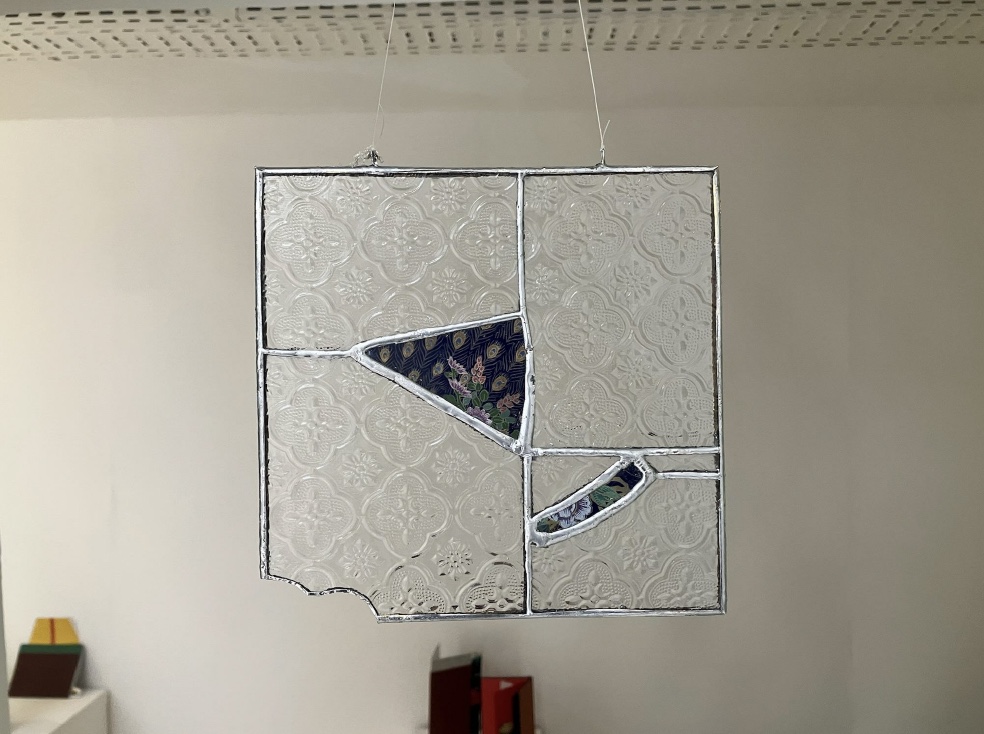
Gil Lekh, « Taous », vue d’installation, 2024 © D.R. 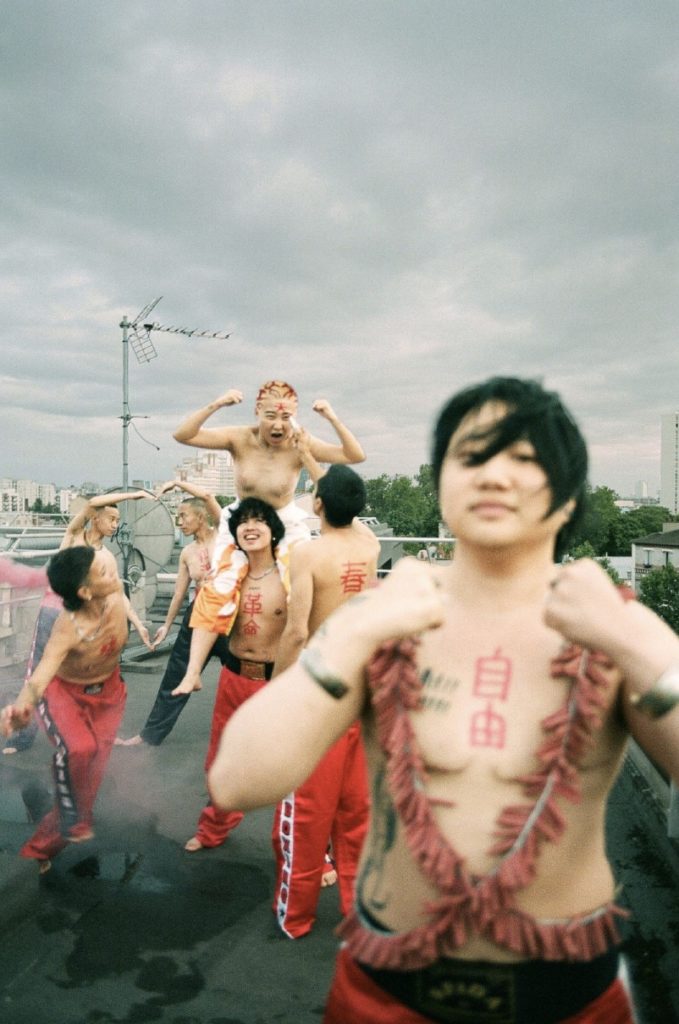
Kianuë Tran Kieu, Photographie de la série GINSANG, 2019 © D.R.
Group Show, “Đoàn tụ, Les eaux d’où l’on vient”, Espace Saint-Rémi, 4 Rue Jouannet, Bordeaux — 26.02-22.03.2026
Đoàn tụ, Les eaux d’où l’on vient réunit 25 artistes ainsi que 3 curatrices vietnamien·ne·s.x et vietnamo-descendant·e·s.x, dans une volonté affirmée de faire émerger des voix plurielles issues de la diaspora vietnamienne en France.
Chacun porte en soi une mémoire fragmentée. A l’issue de la guerre d’Indochine (1946-1954) et de la guerre du Vietnam (1955-1975), des vagues de populations vietnamiennes se sont installées en France. Des décennies plus tard naissent de nouvelles générations, porteuses de récits métissés. Prier des ancêtres dont on ne maîtrise pas la langue, se recueillir devant des autels habités d’images à la fois familières et énigmatiques : l’héritage vietnamien se transforme en un territoire intime à redéfinir. Les artistes réunis dans cette exposition entreprennent ainsi une quête intérieure, à la rencontre de cette vietnamité qui les compose. Đoàn tụ, qui signifie « retrouvailles », devient un point de convergence pour celles et ceux qui partagent une origine commune. À travers une diversité de formes artistiques, les œuvres dialoguent dans un élan commun : remonter à la source, interroger les racines, recomposer les filiations. L’exposition se présente ainsi comme un portrait de retrouvailles symboliques, dressant le reflet mouvant d’un Vietnam qui vit au-delà de ses frontières, dans les mémoires et les imaginaires.
Artistes : Mathias Bensimon, Kim Doan Quoc, Alix Douart Sinnouretty, Manon Ficuciello, Liên Hoàng-Xuân, Luléa Joachim-Tran, Quỳnh Lâm, France Lan Lê Vu, Gil Lekh*, Thiên Ngoc Ngô-Rioufol, Cát Nguyên, Flora Nguyen, Lê Hoàng Nguyên, Minh Hieu Ti Nguyen, Camille Nguyễn Vân Thanh, Matthias Pasquet, Pauline Payen, Prune Phi, Tom Sam, Régis Sénèque, Jade Hoa-Rose Tailhandier, Clément Thanh Danh Lê, Nicole Tran Ba Vang, Kianuë Tran Kiêu, Trúc-Ahn.
Commissaires : Eléonore Hải Vân Tran, Camille Minh-Lan Gouin, Margot Huynh Mai Nguyen.
“Đoàn tụ” brings together 25 artists and 3 curators who are Vietnamese and Vietnamese-descendant curators, and aims to highlight the diversity of voices emerging from the Vietnamese diaspora in France.
Each individual carries a fragmented memory. Following the First Indochina War (1946–1954) and the Vietnam War (1955–1975), waves of Vietnamese people settled in France. Over time, new generations have emerged, carrying mixed and layered narratives. Praying to ancestors whose language one may no longer fully understand, gathering before altars filled with images that are both familiar and enigmatic—the inheritance of memory becomes an intimate territory to reinterpret and redefine. The artists brought together in this exhibition therefore embark on an inner exploration, seeking to reconnect with the sense of Vietnamese-ness that shapes them. “Đoàn tụ”, meaning “reuniting” becomes a point of convergence for those who share a common origin. Through a diversity of artistic forms and mediums, the works engage in dialogue with a shared purpose: tracing roots, questioning inherited histories, and reassembling lines of belonging. The exhibition thus unfolds as a portrait of symbolic reunions, offering the shifting reflection of a Vietnam that lives beyond its geographical borders—within memories, bodies, and collective imaginaries.
Artists : Mathias Bensimon, Kim Doan Quoc, Alix Douart Sinnouretty, Manon Ficuciello, Liên Hoàng-Xuân, Luléa Joachim-Tran, Quỳnh Lâm, France Lan Lê Vu, Gil Lekh*, Thiên Ngoc Ngô-Rioufol, Cát Nguyên, Flora Nguyen, Lê Hoàng Nguyên, Minh Hieu Ti Nguyen, Camille Nguyễn Vân Thanh, Matthias Pasquet, Pauline Payen, Prune Phi, Tom Sam, Régis Sénèque, Jade Hoa-Rose Tailhandier, Clément Thanh Danh Lê, Nicole Tran Ba Vang, Kianuë Tran Kiêu, Trúc-Ahn.
Curators : Eléonore Hải Vân Tran, Camille Minh-Lan Gouin, Margot Huynh Mai Nguyen.
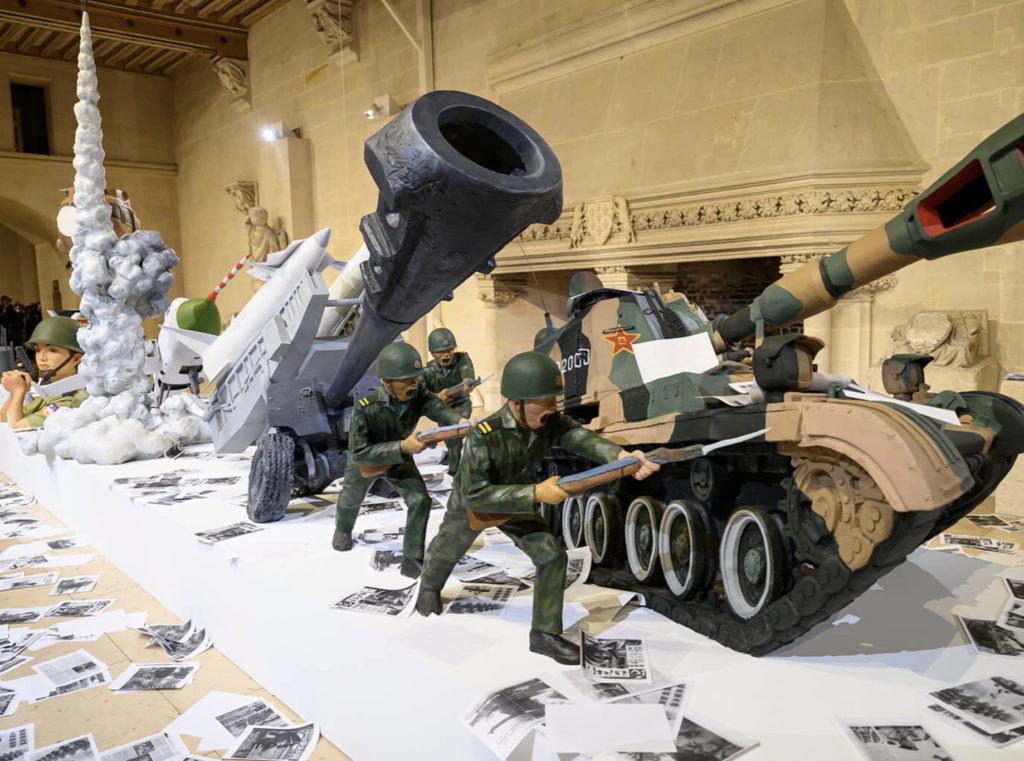
Wang Du, « Défilé », 2000 – Collection du CNAP – Crédit photo Gil Guglio, CMN 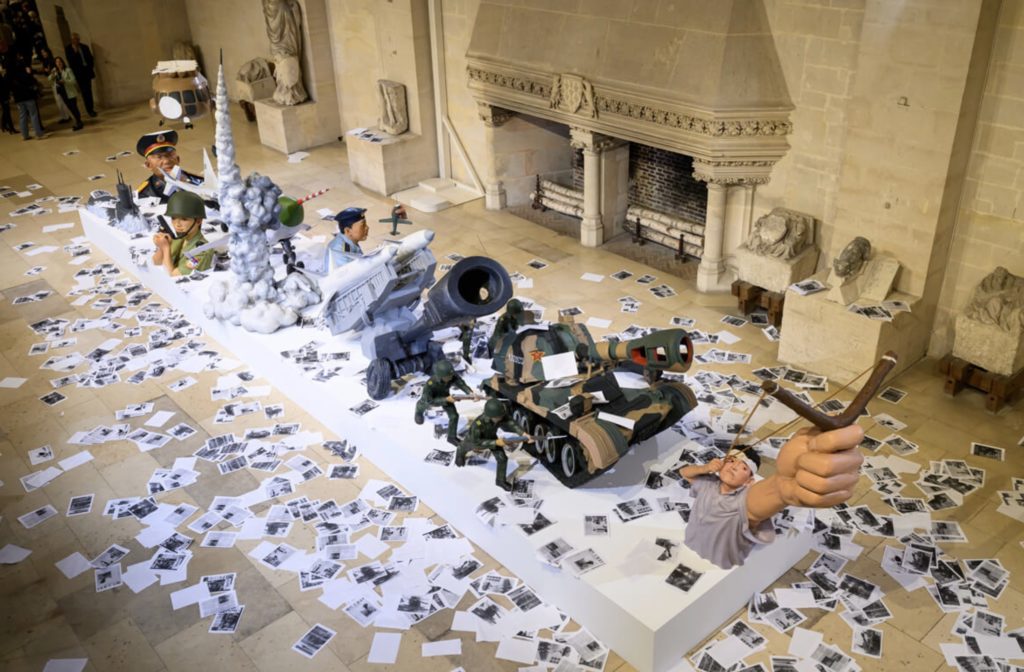
Wang Du, « Défilé », 2000 – Collection du CNAP – Crédit photo Gil Guglio, CMN
Wang Du, « Défilé » @ Château de Pierrefonds, Rue Viollet-le-Duc, Pierrefonds — 06.11.2025-05.04.2026
Dans le cadre du partenariat entre le Centre des monuments nationaux (CMN) et le Centre national des arts plastiques (Cnap), le programme « Biens venus ! » vise à créer un dialogue entre patrimoine et création contemporaine. Sept monuments nationaux participent à cette initiative.
Ainsi, le château de Pierrefonds, ancienne place forte militaire datant du XIVᵉ siècle, accueille Défilé, acquise par le Cnap en 2005. La confrontation entre le château et l’œuvre offre un dialogue portant sur l’imaginaire de la guerre et de la mise en scène du pouvoir. Réalisée en 2000 par l’artiste d’origine chinoise Wang Du (né à Wuhan en 1956, résidant en France), Défilé joue sur l’ambivalence de son titre, qui évoque aussi bien un défilé militaire qu’un défilé de mode. Sur un podium long de douze mètres, dix-sept sculptures en résine peinte se succèdent : chars, avions, missiles, soldats armés composent une procession spectaculaire inspirée d’images médiatiques de l’armée chinoise. Chaque sculpture reprend une image issue de la presse, en conservant son cadre d’origine. Toutefois, les proportions et les échelles sont volontairement distordues. Le sol, jonché de journaux et de coupures de presse, renforce cette impression d’immersion dans un flux continu d’images. L’installation semble préfigurer notre monde contemporain, saturé d’informations et traversé par des discours contradictoires à l’ère des réseaux sociaux.
As part of the partnership between the Centre des monuments nationaux (CMN) and the Centre national des arts plastiques (Cnap), the program “Biens venus !” aims to create a dialogue between heritage sites and contemporary creation. Seven national monuments take part in this initiative.
Within this framework, the Château de Pierrefonds, a former military stronghold dating back to the 14th century, hosts “Défilé”, an installation acquired by the Cnap in 2005. The encounter between the castle and the artwork opens a dialogue around the imagery of war and the staging of power. Created in 2000 by the Chinese-born artist Wang Du (born in Wuhan in 1956 and now lives in France), “Défilé” (show) plays on the ambiguity of its title, which evokes both a military parade and a fashion show. Set on a twelve-meter-long runway, seventeen painted resin sculptures follow one another in sequence: tanks, airplanes, missiles, and armed soldiers form a striking procession inspired by media images of the Chinese military. Each sculpture reproduces an image taken from the press, preserving its original framing. However, the proportions and scales are deliberately distorted. The floor, scattered with newspapers and press clippings, intensifies the sense of being immersed in a continuous stream of images. In this way, the installation seems to anticipate our contemporary world—one saturated with information and shaped by conflicting narratives in the age of social media.
ACA project est une association française dédiée à la promotion de la connaissance de l’art contemporain asiatique, en particulier l’art contemporain chinois, coréen, japonais et d’Asie du sud-est. Grâce à notre réseau de bénévoles et de partenaires, nous publions régulièrement une newsletter, des actualités, des interviews, une base de données, et organisons des événements principalement en ligne et à Paris. Si vous aimez nos articles et nos actions, n’hésitez pas à nous soutenir par un don ou à nous écrire.
ACA project is a French association dedicated to the promotion of the knowledge about Asian contemporary art, in particular Chinese, Korean, Japanese and South-East Asian art. Thanks to our network of volunteers and partners, we publish a bimonthly newsletter, as well as news, interviews and database, and we organise or take part in events mostly online or in Paris, France. If you like our articles and our actions, feel free to support us by making a donation or writing to us.